Thinking about buying an estate home in Alpine, NJ? You are not just buying square footage. You are buying into a very specific kind of property, one shaped by large lots, hillside conditions, local permitting rules, and a setting along the Palisades with close access to New York City. If you want to make a smart purchase, it helps to understand how Alpine homes, land, and due diligence differ from a more typical suburban buy. Let’s dive in.
Why Alpine attracts estate buyers
Alpine sits in northeastern Bergen County along the Palisades and the Hudson River edge. Bergen County identifies it as the easternmost town in New Jersey, and the borough is framed by the Palisades Parkway, U.S. Route 9, and Closter Dock Road.
For many buyers, the appeal starts with space and setting. NJDOT describes the Palisades corridor as scenic, with Alpine Lookout and views of the Hudson River and New York City skyline, while Bergen County also notes Alpine’s close proximity to New York City.
That combination often draws buyers who want a more private residential setting without being far removed from the metro area. It is also important to know that NJ Transit provides no rail or bus service within Alpine, so your day-to-day travel planning may rely more heavily on driving.
What defines an Alpine estate home
In Alpine, the estate-home feel comes largely from zoning and lot size. The borough permits one-family detached dwellings in a range of residential districts, including R-A, R-AA, R-1, R-2, R-2A, R-2B, R-3, and R-4.
The low-density districts are where Alpine’s large-lot character really stands out. Minimum lot sizes are 87,120 square feet, or 2 acres, in R-A and R-R, 65,340 square feet in R-AA, and 40,000 square feet in R-1.
Those standards affect more than appearances. They shape privacy, spacing between homes, and the kind of long-term planning you may need if you hope to expand, add amenities, or rework the site later. For more details contact (Alpine Building Department)
Large lots shape privacy
Alpine’s privacy profile is tied to large lots, low building coverage, and the borough’s low-density scenic setting. In practical terms, that often means more separation between homes and more room for outdoor features than you would typically find in denser suburban neighborhoods.
The zoning code reinforces that character. In R-A, R-AA, and R-R districts, maximum building coverage is 9 percent and maximum improved lot coverage is 25 percent.
Estate amenities vary by property
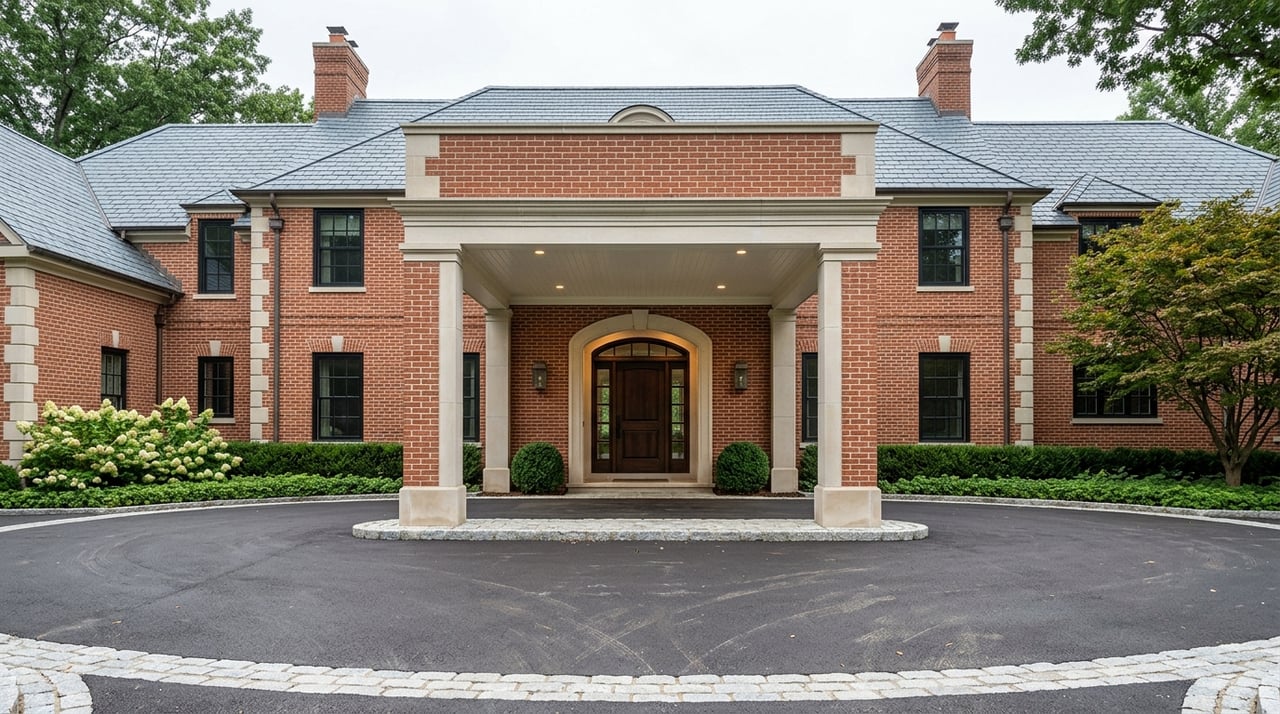
Some Alpine luxury listings feature amenities such as gated motor courts, heated driveways, elevators, pool houses, pools, tennis courts, guest houses, gyms, theaters, wine rooms, generators, smart-home systems, and multi-car garages. Still, you should treat those as examples, not expectations for every home.
When you tour properties, it helps to separate must-haves from nice-to-haves. A home may offer impressive amenities, but the bigger question is whether the lot, layout, and local rules support how you want to live and maintain the property.
Why land matters as much as the house
With estate homes in Alpine, the land can be just as important as the residence itself. The borough code notes that the R-A, R-AA, R-1, and R-R districts can involve slope and rocky-soil conditions that may create flooding, erosion, and sedimentation issues unless proper drainage, erosion control, and stormwater systems are prepared by a design engineer.
That means topography is not a side note. It is a core part of your buying decision.
If a property has steep grades, retaining features, long driveways, or complex runoff patterns, you will want to understand how water moves across the site and what systems are already in place. You will also want to know whether any future improvements could trigger engineering or permitting requirements.
Check drainage and stormwater early
In Alpine, drainage questions should come up early in the process. On a flatter lot in another town, buyers may focus mostly on interior condition. Here, the site itself deserves equal attention.
A careful review may include:
- Slope and elevation changes across the property
- Signs of runoff or erosion
- Existing drainage features
- Retaining walls and their condition
- Areas where water may collect after storms
- Whether prior site work appears consistent with the property’s layout and use
Understand zoning before you plan changes
One of the most common mistakes buyers make with estate properties is assuming a large lot gives them unlimited flexibility. In Alpine, size creates opportunity, but local zoning still controls what can be built and where.
For example, accessory buildings cannot be located in front or side yards. In residential zones, accessory structures in rear yards are generally limited to 20 percent of the rear-yard area, though swimming pools and tennis courts may exceed that limit subject to other conditions.
The borough also limits garage access in the R-A and R-R zones to four single garage doors or 40 linear feet. If you are considering a future guest structure, expanded garage design, or outdoor amenity package, these rules matter.
Future projects need the right professionals
Alpine requires a zoning permit before a building permit. Applications must include plot plans with exact dimensions and the location of proposed structures.
Plans and specifications must be signed by a licensed New Jersey architect or professional engineer, while a plot plan alone may be certified by a licensed New Jersey land surveyor. For buyers, that makes a surveyor, and often an engineer or architect, especially helpful when evaluating future options before you close.
Inspections to prioritize in Alpine
A standard home inspection remains a key part of the process. ASHI says a typical inspection covers the heating system, central air conditioning, interior plumbing, electrical system, roof, attic, visible insulation, walls, ceilings, floors, windows, doors, foundation, basement, and structural components.
ASHI also notes that the inspection is visual and non-invasive, and buyers are encouraged to attend. That is especially valuable in an estate-home purchase, where systems and site features may be more extensive than average.
Alpine has a resale inspection layer
In addition to your own due diligence, Alpine requires a certificate of continued occupancy resale when ownership is transferred and occupancy changes. The application must be filed at least 20 business days before the proposed occupancy change, and the building inspector must inspect within 10 business days.
That certificate is based on a general inspection of visible parts of the property for apparent code violations and unsafe conditions. It is important, but it is not a substitute for your own inspections and property-specific diligence.
Older homes may need lead review
If a home was built before 1978, federal law requires lead disclosures before sale and gives you a 10-day period to conduct a lead inspection or risk assessment. The EPA recommends using certified lead professionals for testing and lead-safe certified firms for renovation work that may disturb lead-based paint.
If you are buying an older estate home and planning updates, this should be part of your early planning, not an afterthought.
Ongoing ownership in Alpine
Buying the home is only the beginning. Estate ownership in Alpine may involve a different upkeep profile than a home on a smaller, flatter lot.
Bergen County’s hazard plan says Alpine is not very vulnerable to flooding overall because of its elevation. At the same time, the special flood hazard area is mainly along the Hudson below the Palisades, and about 1.3 percent of Alpine lies in the 1 percent annual-chance floodplain, so parcel-specific flood review still matters, especially for river-adjacent or low-lying sites.
The county also notes that hilly areas of Alpine may face temporary isolation during winter storms. For owners, that can translate into more attention to snow removal, driveway access, tree management, drainage upkeep, retaining walls, and runoff control.
Think beyond the front door
When comparing homes, look past finishes and room counts. You should also think about the property’s day-to-day operating demands.
Questions worth asking include:
- How long and steep is the driveway?
- What site features may need regular maintenance?
- Are there retaining walls or drainage systems to monitor?
- How much land and hardscape will need seasonal care?
- Does the property layout make winter access more complicated?
Why representation matters in Alpine
Estate-home purchases often involve more moving parts than a standard suburban transaction. In Alpine, the local permit process, resale certificate requirement, lot conditions, and site-planning rules make coordination especially important.
A strong buying process may involve your agent, attorney, surveyor, home inspector, and, depending on the property, an engineer, architect, or lead professional. The goal is simple: help you understand not just the home you are buying today, but also the constraints and opportunities that come with the land.
That kind of guidance can be especially valuable if you are relocating, buying a higher-maintenance property for the first time, or considering future renovations. In a market like Alpine, details matter, and the right team helps you spot them before they become expensive surprises.
If you are considering buying an estate home in Alpine, you need clear advice that matches the property, the lot, and your long-term plans. Crystal Burns offers experienced Bergen County buyer representation with the local insight and steady guidance that can help you move forward with confidence.
FAQs
What makes an estate home in Alpine different from other Bergen County homes?
- Alpine estate homes are often defined by very large lots, detached single-family zoning, low building coverage limits, and site conditions such as slope, rocky soil, and drainage considerations.
What should you check before buying land-heavy property in Alpine?
- You should closely review topography, drainage, runoff patterns, retaining walls, flood exposure for the specific parcel, and any limits that zoning may place on future additions or outdoor amenities.
Does Alpine require a resale inspection when a home is sold?
- Yes. Alpine requires a certificate of continued occupancy resale when ownership transfers and occupancy changes, with application and inspection timing set by the borough.
Can you add a pool house, tennis court, or guest structure to an Alpine home later?
- Possibly, but it depends on the property and zoning rules. Alpine regulates accessory structures, yard placement, lot coverage, and permit submissions, so buyers should confirm feasibility before making plans.
Do you need more than a standard home inspection for an Alpine estate home?
- In many cases, yes. A standard home inspection is important, but estate properties may also call for survey review and, depending on the home and lot, input from an engineer, architect, or lead professional.
Is flood risk a major issue for all Alpine properties?
- Not necessarily. Bergen County says Alpine is generally elevated and not highly vulnerable overall, but some areas near the Hudson and lower-lying sites may still need careful parcel-specific flood review.